Tampa Pool Lightning Safety: When to Leave the Water
October 13th, 2026 | by jackiec
Leave the swimming pool at the first sound of thunder or sight of lightning, even if the sky overhead looks clear. Stay inside safe shelter for at least 30 minutes after the last thunder or visible flash.
Tampa Bay pool lightning safety depends on acting before rain arrives, especially when children need help leaving the water. We recommend one household rule everyone understands: clear the pool, move indoors, and let one adult manage the return time.
Last updated: October 2026
When should you leave the pool during a storm?
Everyone must leave the water immediately at the first sound of thunder or sight of lightning. Don’t wait for another sound of thunder or a weather alert; leave toys and unfinished laps behind.
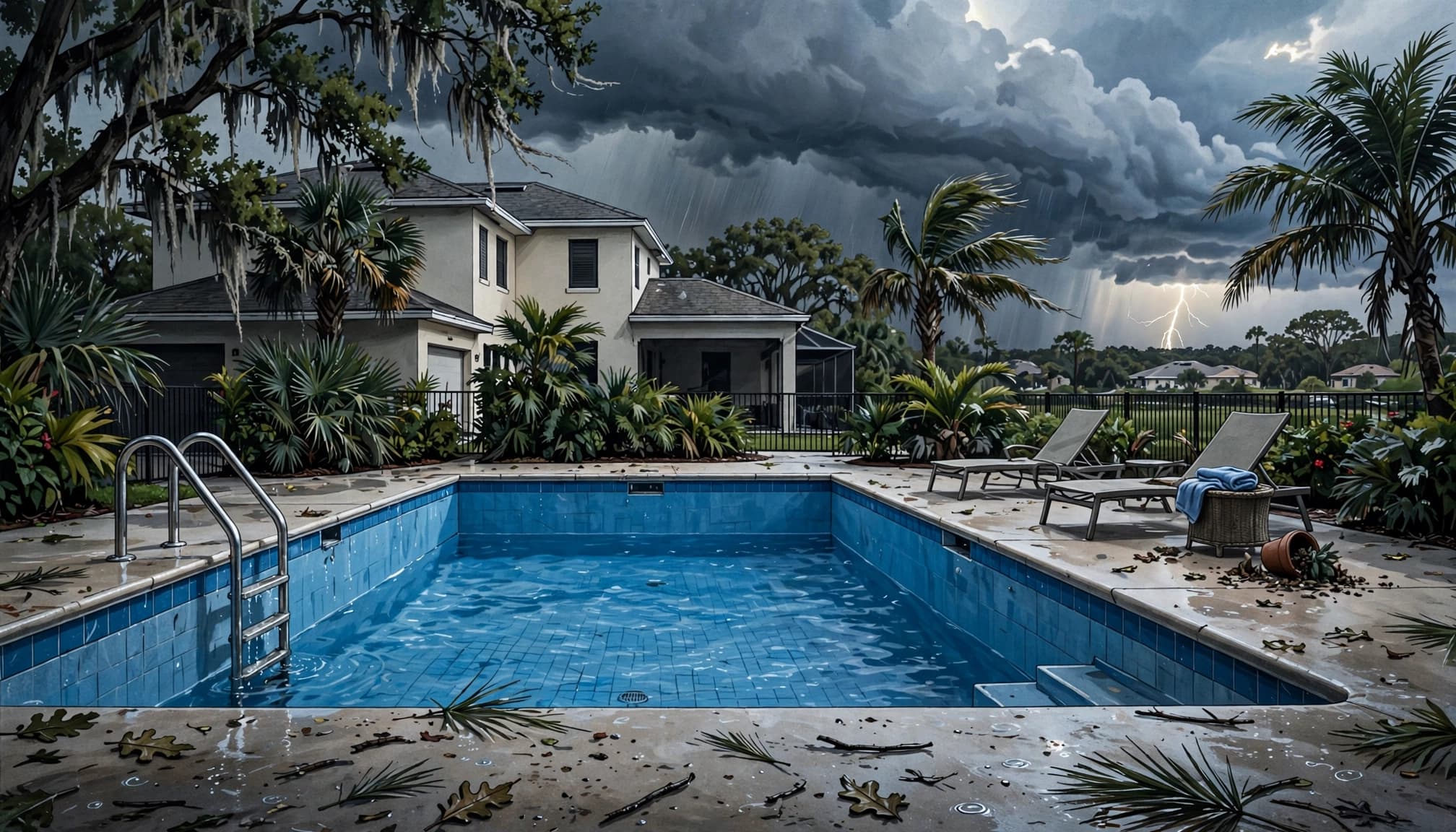
For a backyard pool gathering in Tampa Bay, follow this simple emergency action plan:
- Announce that swimming has stopped, then help children and anyone with limited mobility leave promptly.
- Move everyone directly into the house or another safe shelter. Leave towels, toys, and outdoor cooking equipment behind.
- Count everyone once you’re indoors, secure pool access, and assign one adult to track the waiting period.
The rule also covers attached spas, hot tubs, tanning ledges, and people sitting with their feet in the water. Poolside spectators need shelter, too.
Water, pool plumbing, pumps, heaters, metal ladders, and handrails can conduct electrical current. A strike doesn’t have to hit a swimmer directly to cause injury.
Don’t use rain as your warning system. Lightning can threaten your backyard before rain starts and after the heaviest rain passes. If skies become threatening before you hear thunder, move indoors early.
Which shelters are safe near a backyard pool?
The safest shelter is a substantial, fully enclosed building with four walls, a roof, and closed windows and doors. For most homeowners, that’s the house.
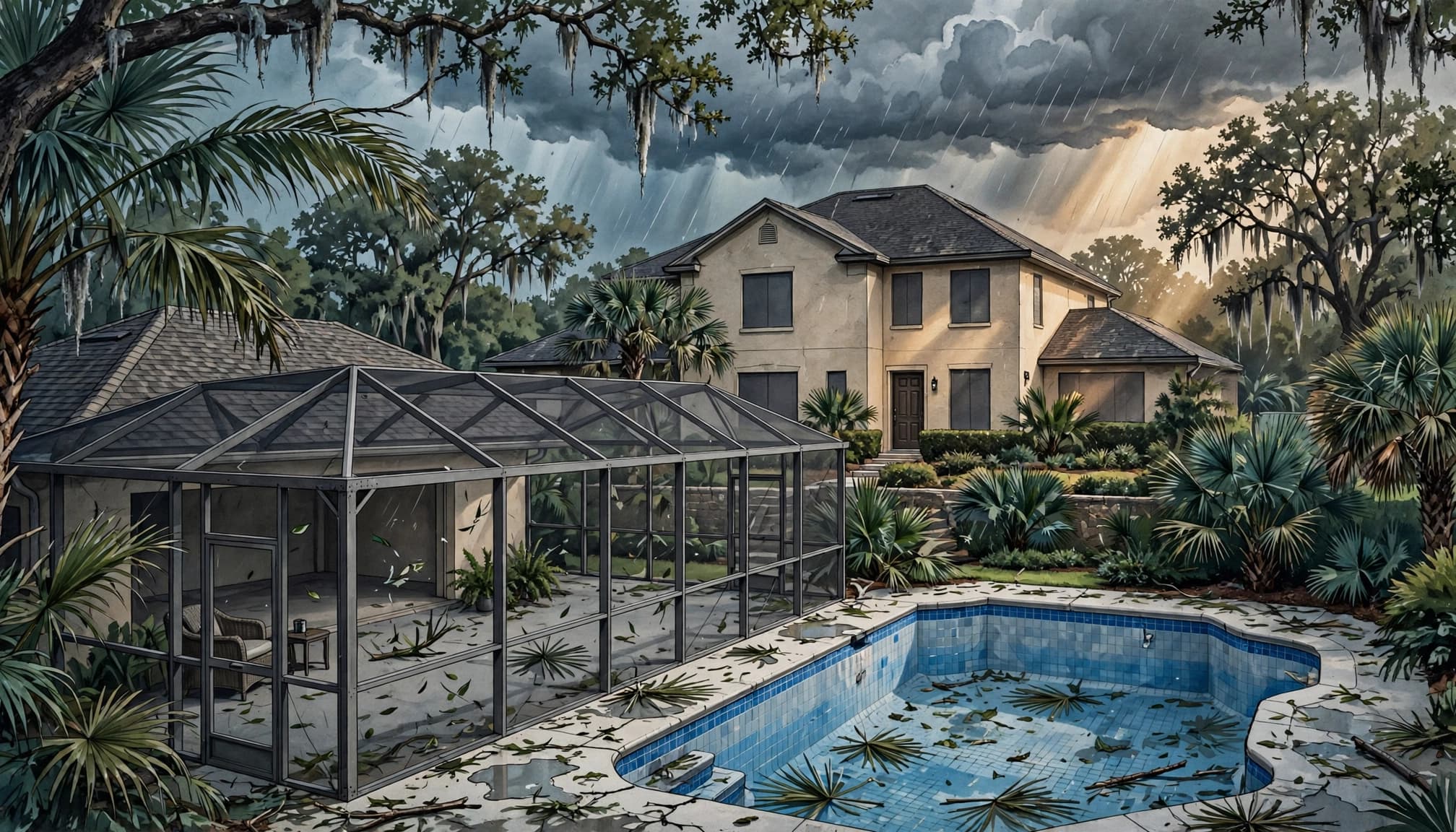
Head into the house, not under a patio roof
Once inside, stay away from windows, exterior doors, and plugged-in electrical equipment. Lightning-related electrical current can travel through plumbing and electrical systems.
A covered outdoor kitchen remains an outdoor space, even when its roof keeps everyone dry.
If a substantial building isn’t available, use a fully enclosed, hard-topped metal vehicle with the windows closed. Convertibles, golf carts, and open utility vehicles don’t qualify.
The National Weather Service’s lightning shelter guidance excludes carports, open garages, and covered patios. Gazebos, pavilions, tents, and open-sided cabanas are also unsafe places to wait.
Why screened lanais don’t protect swimmers
A screened enclosure lets air and rain through its mesh and lacks the protection of a substantial building. Its roof and aluminum frame don’t make the pool safe during lightning.
Screening can help with insects and debris, but it doesn’t change the evacuation rule. Everyone should leave both the water and the lanai.
We recommend keeping the route to the house clear before swimming begins. Avoid arrangements that require children or mobility-aid users to maneuver around furniture during a hurried exit.
How long should swimmers wait after thunder?
Wait a full 30 minutes after the later of the last thunder you hear or the last visible lightning. Any new thunder or flash restarts the entire waiting period.
Start a fresh 30-minute timer
The National Weather Service’s outdoor activity safety guidance calls for waiting at least 30 minutes after the last thunder. For your pool routine, reset the timer after visible lightning too.
These times show how each new cue resets the return time:
| Latest storm cue | Earliest possible return |
|---|---|
| thunder at 3:10 p.m. | 3:40 p.m. |
| Another rumble at 3:24 p.m. | 3:54 p.m. |
| Lightning at 3:36 p.m. | 4:06 p.m. |
Those are the earliest possible return times, provided no further storm cues occur and conditions are otherwise safe.
Give one adult control of the return time
Use a phone timer indoors and record the latest cue. For organized pool activities, include the return-time decision in the emergency action plan.
At a family gathering, one responsible adult should announce whether the pool remains closed. Children shouldn’t treat sunshine, lighter clouds, or a pause in rain as permission to return. Music and television can mask distant storm sounds, so don’t rely on the timer alone.
A 30-minute timer measures time since the last storm cue. Every new rumble or flash starts a new waiting period.
How far away can lightning threaten a Tampa pool?
Lightning can strike beyond the rainy part of a thunderstorm. Distance estimates help explain the risk, but they should never delay your exit when thunder is audible.
Use flash-to-bang only to understand distance
Count the seconds between a lightning flash and its thunder, then divide by five to estimate miles. A 30-second interval means the strike was about six miles away.
That calculation isn’t permission to keep swimming when it sounds farther away. If you hear it, move into shelter.
The National Weather Service warns that lightning can strike beyond the storm, including up to about 10 miles away. Some “bolts from the blue” can reach roughly 20 miles from their parent thunderstorm.
Plan around Tampa Bay’s summer storm pattern
Florida is often called the lightning capital of the United States. Afternoon thunderstorms create the greatest seasonal concern during June, July, and August, although lightning occurs outside those months.
For households in Lutz, Westchase, Wesley Chapel, and Riverview, a sunny morning doesn’t settle the afternoon swimming plan. Check forecasts from the Tampa Bay/Ruskin office before outdoor gatherings.
At staffed pools, a lifeguard should follow a written emergency action plan, use a designated weather watcher, and monitor NOAA Weather Radio or lightning-detection tools. Alerts support, but don’t replace, immediate action when lightning is seen.
Protect pool equipment without delaying shelter
Equipment protection belongs in your preparation plan. Once thunder begins, getting people indoors takes priority over shutting down pumps or protecting electronics.
Prepare controls before a storm approaches
Learn your equipment’s shutdown procedure during calm weather. If your system’s instructions call for shutdown before a storm, complete it while conditions are safe. There’s no universal switch-off sequence for every pump, heater, or automation system.
Don’t go outside during lightning to reach a disconnect, unplug equipment, or inspect the equipment pad. Also, don’t open electrical covers or approach controls surrounded by standing water.
Bonding reduces voltage differences between conductive pool components. However, correct bonding doesn’t guarantee protection against lightning or utility surges. Grounding, GFCI protection, surge protection, and suitable disconnects each have separate roles.
Inspect the backyard after the waiting period
Once the weather is safe, inspect the route, gates, deck, and equipment area before reopening the pool. Look for fallen branches, loose furniture, damaged screening, and water around electrical equipment.
Repeated GFCI trips, damaged wiring, unusual controller behavior, or visible damage require a licensed professional’s attention. Don’t remove covers or handle energized equipment to investigate.
For custom pool construction in Florida, we recommend planning equipment-pad drainage and service access early. After storms, clear debris and assess water quality before swimming. Lightning clearance alone doesn’t resolve cloudy water, damaged barriers, or electrical faults.
What should a bystander do after a lightning strike?
Call 911 immediately. Lightning victims don’t retain an electrical charge, so touching them doesn’t expose you to any retained charge.
The CDC’s lightning first-aid guidance confirms that victims can be touched safely. However, ongoing lightning still threatens rescuers, and damaged electrical equipment can create a separate hazard.
Take these actions without unnecessary delay:
- Call 911, give the address, and explain that a person suffered a lightning strike near or in a pool.
- Check responsiveness and normal breathing. If the person is unresponsive and isn’t breathing normally, begin CPR and follow the dispatcher’s instructions.
- Send someone for an AED. Dry the chest for pad placement, follow the device’s prompts, and keep everyone clear during analysis and shocks.
If the victim remains in the water, avoid a rescue that places you in danger. Get help and use available rescue equipment. Don’t delay CPR once the person is safely out.
Because a swimming incident can also involve drowning, rescue breaths matter. Follow your training and the dispatcher’s instructions. Anyone struck by lightning needs emergency medical evaluation, even if they initially appear alert.
Key takeaways for Tampa pool owners
We recommend sharing these rules with every caregiver and guest before a pool gathering:
- Leave the water at the first thunder or visible lightning, without waiting for rain.
- Move into a substantial enclosed building, not a screened lanai or covered outdoor space.
- Restart the full 30-minute waiting period after every new rumble or flash.
- Keep people out if the storm leaves electrical damage, unsafe access, or water-quality problems.
A household plan works best when everyone knows the destination and one adult controls reopening.
Frequently asked questions
Are indoor swimming pools safe during lightning?
Indoor pools aren’t risk-free. Plumbing, electrical wiring, windows, and connected showers remain potential hazards during a thunderstorm. Being under a roof doesn’t make contact with pool water safe.
We recommend leaving the water and following the facility’s lightning closure procedures. Move to the designated indoor shelter area, away from windows and plumbing. Don’t remain in a locker-room shower while waiting.
Likewise, an enclosed home provides shelter, but that doesn’t mean every activity inside is safe during lightning.
Can children shower while waiting to swim again?
Children and adults should avoid showers, baths, sinks, and other plumbing fixtures during an active thunderstorm. Lightning can travel through a building’s plumbing and electrical systems.
Also avoid corded phones and plugged-in computers or other connected electrical equipment. A battery-powered phone that isn’t charging is a better choice for tracking the wait or contacting family.
Dry off with towels indoors instead. Then keep children occupied away from windows and pool-access doors until the waiting period ends and an adult approves returning.
Build a backyard with a clear storm plan
Tampa pool lightning safety starts with a prompt exit and a dependable shelter plan. We recommend making the 30-minute reset rule part of your family’s routine before the next swimming day.
A thoughtful backyard layout can support clear access, sensible equipment placement, and comfortable outdoor living between storms.
Planning a new pool? Book a free consultation with Tropical Escapes Pool Builders or call 813-474-2024 to discuss your Tampa Bay backyard.