Why Tampa Pools Turn Cloudy After Afternoon Storms
October 20th, 2026 | by jackiec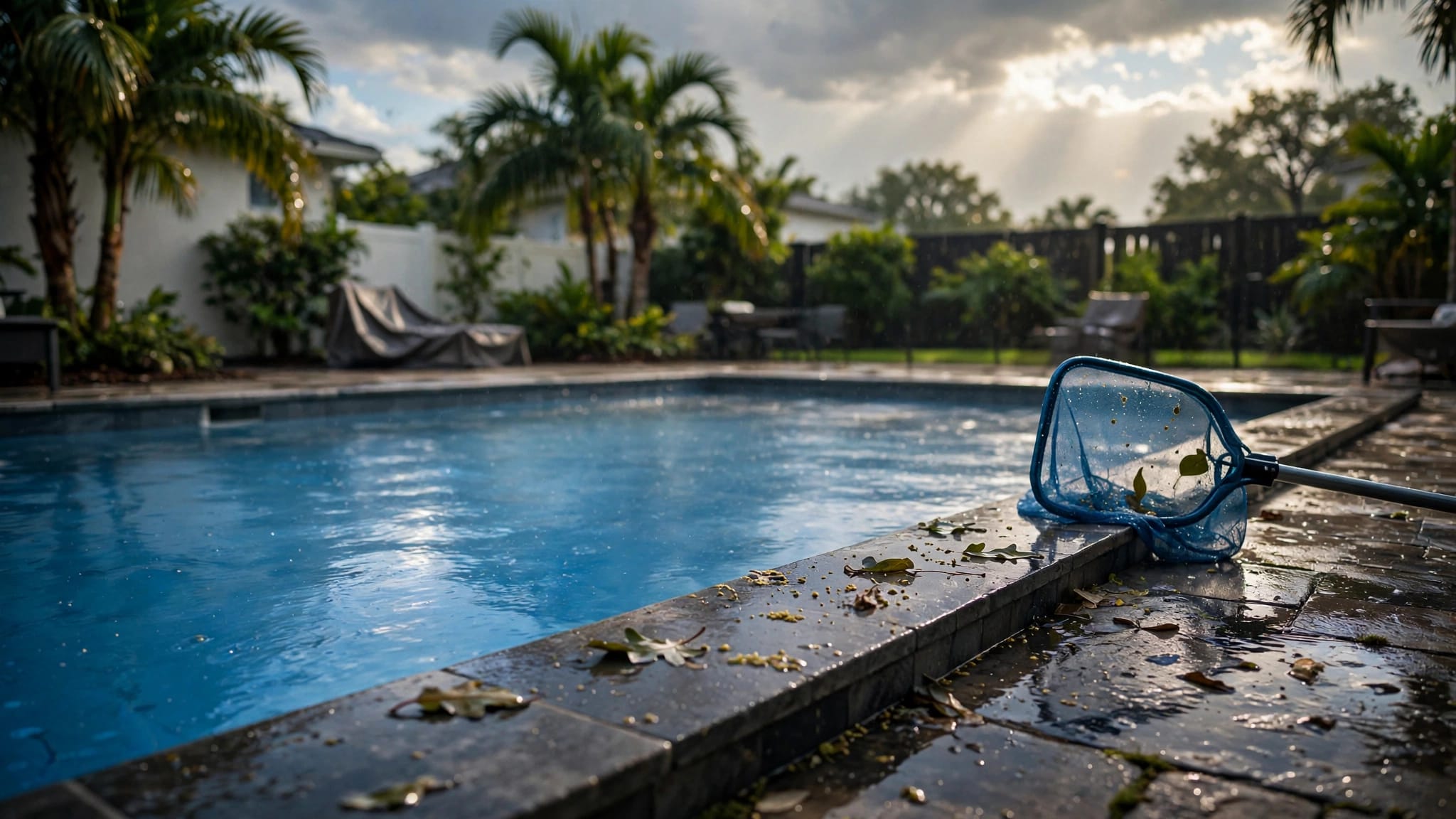
After Tampa’s afternoon storms, cloudy pool water can result when rainwater dilutes chlorine and wind or runoff adds debris. Rain can also shift water chemistry, so a cloudy pool after rain needs testing before treatment.
We recommend identifying the cause before adding shock or clarifier. Start with debris removal, water testing, and filtration, then choose treatment based on what those checks reveal. Cloudiness alone isn’t a reason to add another shock.
Key Takeaways
- Storm debris consumes chlorine and leaves particles that take time to clear.
- Balance water before shocking; persistent milkiness can indicate calcium precipitation rather than algae.
- Clarifier suits mild haze, while flocculant requires equipment that can vacuum settled material to waste.
Why Does a Pool Turn Cloudy After Rain?
Storm debris and diluted sanitizer
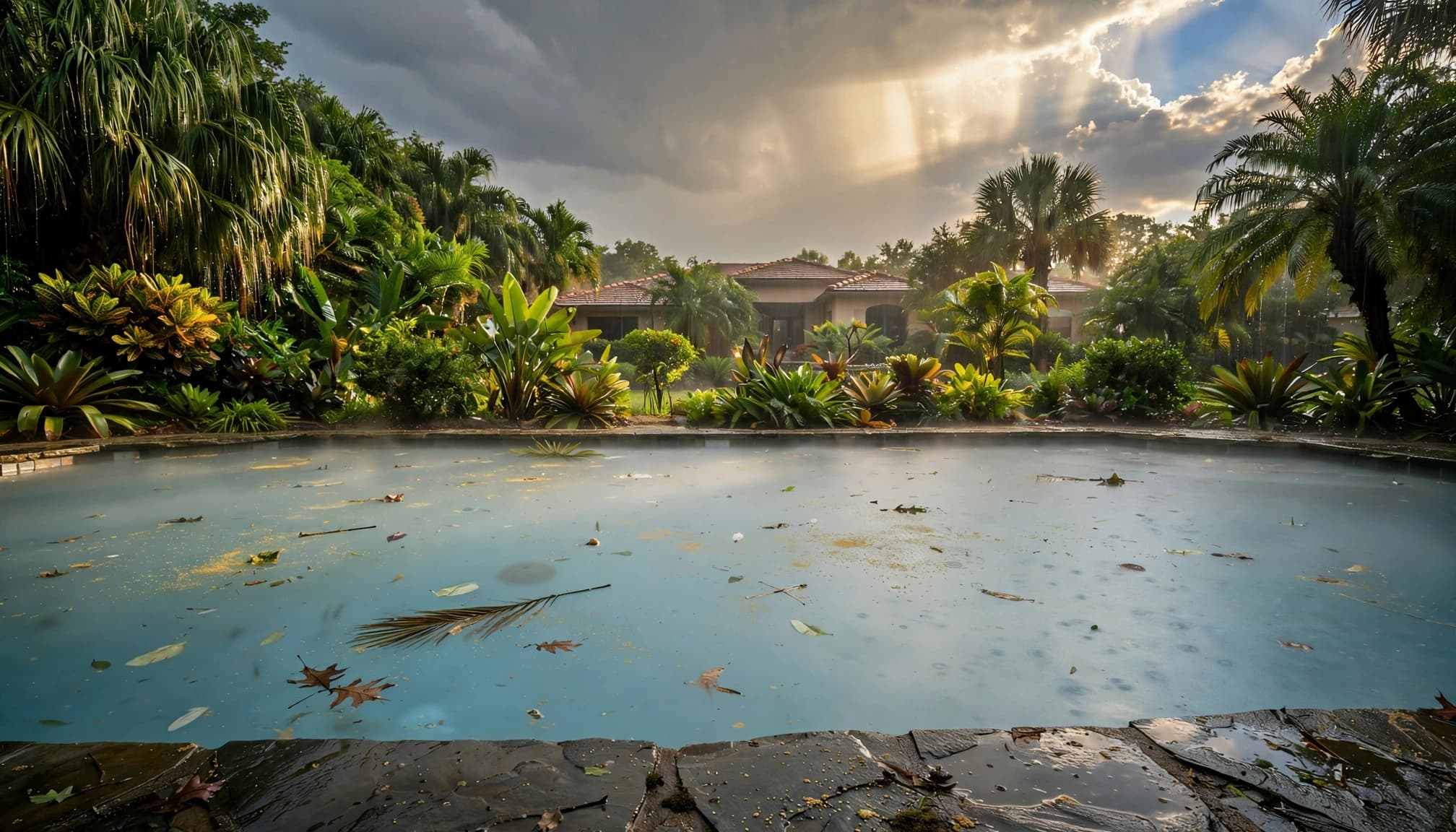
Heavy rain can dilute chlorine, cyanuric acid (CYA), alkalinity, and calcium hardness. Meanwhile, leaves, pollen, and grass clippings add organic material that consumes chlorine. Fine soil particles can remain suspended even when your chemical readings look normal.
Rain’s acidity can lower pH, particularly when alkalinity is already low. However, the change depends on your starting chemistry and how much water enters. Heavy rain affects pool chemistry through dilution and contamination, so start cleanup by testing pool water chemistry rather than choosing a treatment by appearance.
Milky water can have another cause
White cloudiness after adding pH increaser or calcium hypochlorite shock can indicate calcium carbonate precipitation. The product adds calcium, and high pH, high alkalinity, and calcium-rich water favor this problem.
Green water with slippery surfaces suggests algae. Clear green-tinted water can involve metals such as copper. Color alone doesn’t identify the cause, so test before choosing a treatment. Don’t repeat shock until testing rules out a chemistry problem.
What Should Be Tested First?
Test free chlorine, pH, and total alkalinity first. Then measure CYA, calcium hardness, and combined chlorine if cloudiness persists.
For many residential pools, pH 7.4 to 7.6 and alkalinity 80 to 120 ppm are practical starting targets. Recommendations vary with sanitizer type and water-balance needs. Finish material also matters, especially in plaster pools, where calcium balance needs attention.
A conventional outdoor-pool CYA target is 30 to 50 ppm, though equipment requirements can differ. High CYA slows disinfection and increases chlorine requirements.
The CDC’s home-pool testing guidance recommends at least 2 ppm free chlorine when CYA is present. That’s a minimum, not a universal treatment target.
Adjust pH and alkalinity before shocking. For milkiness associated with high pH, correct the chemistry rather than adding more calcium-containing shock. Use muriatic acid only when test results call for it, and follow the product label.
For recurring algae, phosphate testing can help, but it doesn’t replace checks of sanitizer, circulation, and water balance.
How to Clear Storm-Related Cloudiness
First hours: remove debris and restore circulation
Wait until the storm has passed. Stay sheltered for at least 30 minutes after the last thunder or lightning before returning outside.
Skim leaves and empty the skimmer basket. Switch off the pool pump before opening its basket. Brush surfaces and remove sediment. If your equipment supports it, use a pool vacuum to send heavy sediment to waste rather than through the filter.
Next, balance the tested water. If test results show oxidation treatment is needed, shock at dusk because sunlight breaks down chlorine. Follow the product label for the dose based on pool volume and measured chemistry. Never mix pool chemicals.
At 24 and 48 hours: reassess progress
Run filter 24/7 while the water clears, if the equipment manufacturer’s instructions allow it. Clean or backwash when filter pressure rises about 8 to 10 psi above the clean baseline, unless the equipment specifies another threshold.
At 24 hours, retest chlorine and pH. Improving visibility means filtration is helping; declining chlorine suggests continuing sanitizer demand.
At 48 hours, persistent haze calls for a closer look at filter condition, circulation, and chemistry. If every Riverview or Wesley Chapel downpour causes cloudiness, check for runoff entering the pool. Our guidance on pool placement and drainage addresses this design issue.
Should You Use Clarifier or Flocculant?
Choose a treatment only after sanitation and water balance are under control.
| Water condition | Treatment | How it works |
|---|---|---|
| Mild haze with working filtration | Clarifier | Binds tiny particles so the filter captures them. |
| Heavy suspended sediment with compatible equipment | Flocculant | Forms heavier clumps that settle for removal. |
| Active algae or calcium precipitation | Correct the underlying problem first | Particle treatments won’t resolve the cause. |
Clarifier is the simpler choice for slight haze. Flocculant requires a vacuum-to-waste route. A sand filter alone doesn’t establish compatibility, so check that the product supports settling and vacuuming material to waste.
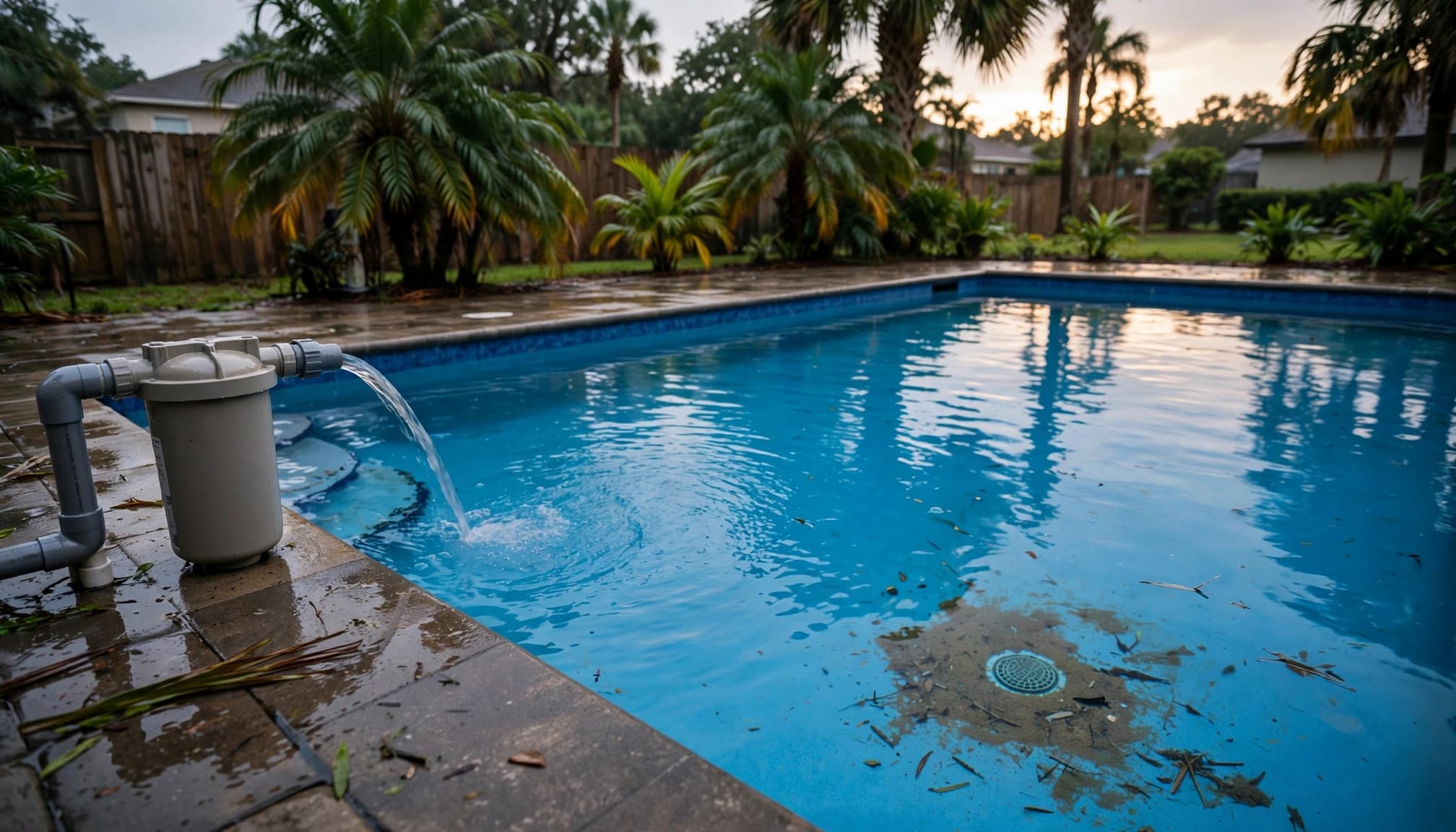
A typical sequence involves recirculating the water, letting particles settle with the pump off, then vacuuming slowly to waste. Follow the product instructions for timing and steps.
Frequently Asked Questions
How long does clearing take?
Recovery time depends on the cause, water balance, circulation, and equipment. Follow the specific product instructions, since treatment and timing vary by product.
Will baking soda clear cloudy water?
Baking soda raises total alkalinity. It doesn’t remove suspended particles or kill algae. Use it only when testing shows low alkalinity, since adding it unnecessarily can worsen water balance.
Is swimming safe while the pool is cloudy?
Keep everyone out if you can’t clearly see the bottom or drain. Check visibility and sanitizer levels before swimming. After shocking, follow the product’s re-entry directions and confirm test results meet its requirements.
Build Storm Readiness Into the Backyard
A cloudy pool after rain usually needs targeted cleanup and chemistry correction. We recommend treating repeated storm cloudiness as a reason to examine drainage and filtration, too.
Thoughtful planning helps keep outdoor living practical through Tampa’s rainy season.
Planning a new backyard pool? Explore our custom pool design and construction and book a free consultation, or call 813-474-2024.